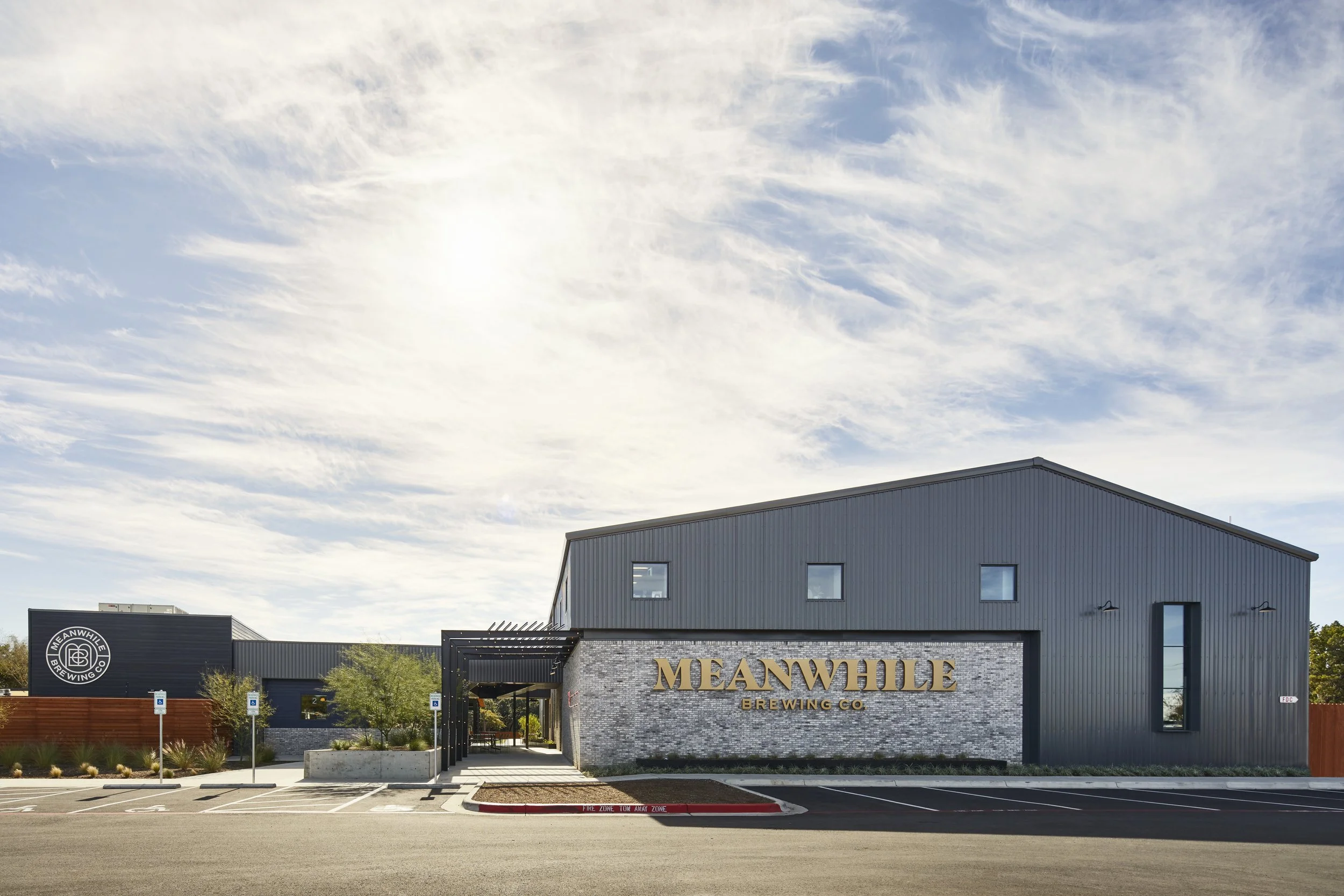
The word destination gets used a lot in hospitality. Everybody wants to create one, but it is worth defining what that actually means before spending millions of dollars trying to build it.
A destination is not simply a beautiful building. It is not an expensive building, a big patio, a great bar, a clever brand, or the place everyone posts about for three weeks after opening.
Those things can certainly help. But a destination, at its simplest, is a place people are willing to make a choice for.
They drive farther. They stay longer. They bring someone back. They work it into their plans instead of stumbling across it on the way to something else.
For an owner, developer, or operator, that distinction matters. There is a very real difference between giving people somewhere they can go and giving them a reason to choose you.
We have spent years watching that difference play out across breweries, distilleries, restaurants, hospitality spaces, and other experience driven businesses. The places that work particularly well rarely owe their success to one spectacular design move. More often, dozens of decisions support the same idea about who the business is for, why people are coming, what they should be able to do once they arrive, and how the property needs to perform when they do.
That is something worth figuring out long before anyone starts choosing finishes.
Start With the Reason to Come
Owners naturally enter a project thinking about the physical place. They have saved images, visited businesses they admire, studied competitors, and developed ideas about what they want.
Maybe it is a large patio, an open kitchen, visible production, a private event space, a lawn, a rooftop, or a particular feeling when someone walks through the door.
All of that is useful.
But there is another question we need to answer first:
Why are people choosing to experience this here?
That is different from asking what you sell.
Two restaurants can serve equally good food and have completely different relationships with their customers. Two hotels can offer similar amenities while only one becomes the place guests recommend to friends. Two tasting rooms can produce comparable products while one becomes part of someone's Saturday and the other remains a twenty minute stop.
Before deciding what a hospitality space needs physically, we need to understand what role the business is trying to play in someone's life.
That begins with specifics. Who is coming? Who are they bringing? What occasion brought them there? How long are they likely to stay? What else might they do while they are there? What would make them return?
Those answers start making design decisions for us.
If gathering is central to the concept, for example, we need to define what gathering actually looks like. A couple having dinner, a family spending an afternoon, a group of twelve friends, and a company event for 75 people all place different demands on a property.
If discovery is part of the experience, revealing everything from the parking lot may work against that goal. If making the product is an important part of the story, there may be value in allowing guests to see production. If the average visit is expected to last several hours, the customer has different needs than someone making a forty five minute stop.
This is one reason copying a successful hospitality concept rarely produces the same result somewhere else. You can copy the visible answer without understanding the business question that produced it.
What Do We Actually Know About Place and Customer Behavior?
There is a tendency in design conversations to talk about experience in abstract terms. We know the environment matters, but there is research that helps explain how.
A study published in the International Journal of Hospitality Management examined first time and repeat customers in upscale restaurants and found that elements of the physical environment, including aesthetics, lighting, layout, and table settings, were connected to how customers evaluated their experience. Those evaluations were in turn connected to satisfaction and loyalty. Interestingly, some environmental factors affected first time and repeat customers differently.
That last point is particularly useful.
The customer experiencing a property for the first time is not necessarily evaluating it the same way as someone who has been there ten times.
Another study examined more than 1,400 transactions at a 210 seat restaurant to see whether table configuration and location affected meal duration and spending. Researchers found measurable differences among seating types, including differences in spending per minute.
The takeaway is not that every restaurant should install more booths or eliminate banquettes. It is that decisions that appear purely architectural can have operational and financial consequences.
Maximum seat count tells an owner how many customers can fit into a room. It does not tell them how customers will use those seats, how long they will occupy them, how the seating supports different group sizes, or how efficiently the staff can serve them.
Those are different questions, and they deserve to be part of the design conversation.
Give People More Than One Reason to Stay
One of the patterns we see in successful hospitality projects is that the experience rarely depends on a single thing.
Someone may arrive for dinner and move outside afterward. They may come for the product and discover the food program. A family may choose a place because their kids can comfortably join them, then return without them for an event. One guest wants to sit in the middle of the activity while another wants a table twenty feet away from it.
That variety creates choice.
If every seat offers essentially the same experience, you have created capacity. If different parts of the property support different occasions and different ways of spending time, you have given the business more ways to serve people.
And that does not necessarily require adding another square foot.
This is where hospitality space planning becomes a business conversation.
Consider a patio that works for everyday service, private events, and overflow waiting. Or an outdoor area that gives families somewhere to spend an afternoon but can also support an event at night. Visible production can serve the operational needs of the business while also giving customers something to discover. A smaller room can create an intimate experience on a slow night and provide private event revenue when needed.
The goal is not to make every square foot do five things. It is to understand what each part of the property contributes and whether the building is giving the operator enough ways to use the asset.
For owners thinking about a new project, expansion, or renovation, that is an important distinction. More square footage is not automatically more valuable square footage.
The Customer Experiences the Whole Property
The main revenue generating spaces understandably get a lot of attention during design. They should.
But the customer experiences the whole property.
They experience the parking lot. The walk to the entrance. The front door. The place where they wait. The ordering process. The transition outside. The route to the restroom. The view into a kitchen or production area. The awkward piece of property behind the building that nobody quite knew what to do with.
Those moments affect how easily people understand and use a place.
There is a business consequence to getting them wrong.
A study published in the Journal of Operations Management analyzed the behavior of 94,404 restaurant customers over a twelve month period. Longer waits were associated with customers being more likely to leave, taking longer to return, and spending less time dining when they did stay.
Architecture cannot eliminate every wait, but planning can either help the operation or make the problem worse.
Where do people go when they arrive? Can they tell what to do next? Where does a line form? Does that line interfere with everyone else trying to move through the space? Where can people wait without feeling like they are in the way? Can staff move efficiently without constantly crossing guest circulation?
These may seem like small decisions on a floor plan. They become very real when hundreds of people are moving through the property.
One of the most useful exercises during early hospitality planning is to walk through the experience without thinking about architecture at all:
Arrival. Entry. Orientation. Ordering. Waiting. Gathering. Exploring. Staying. Leaving.
Where does the experience get easier? Where does it become frustrating? Where does the customer need information? Where is there an opportunity to discover something they did not expect?
You can learn quite a bit about what a building needs from that exercise.
Design for Tuesday, Not Just Saturday
It is relatively easy to imagine a new hospitality business full.
Opening weekend. Friday night. Beautiful weather. Every seat occupied.
The harder question is what the place feels like when it is not full.
A room designed for 250 people can feel pretty lonely with 40. It may also require staffing, lighting, conditioning, cleaning, and circulation that make sense at peak capacity but become inefficient during slower periods.
Most hospitality businesses do not operate at peak capacity every hour they are open.
The property needs to work at different volumes.
Can individual areas carry their own energy? Can a smaller group occupy one portion of the property without feeling like they are sitting in an empty event hall? Can certain spaces open and close based on demand without making the customer experience feel compromised? Can the business comfortably serve Tuesday afternoon and Saturday night?
This is both an experience decision and an operational one.
Maximum occupancy is important. So is understanding how much of the property needs to be occupied before it feels successful.
That question can influence everything from the organization of rooms and service areas to furniture, acoustics, lighting, staffing, and how different parts of the property connect.
The best hospitality spaces can expand and contract. They can handle being slammed without depending on being slammed to feel good.
More Time on Property Is Only Valuable If There Is Something to Do With It
Hospitality businesses often talk about dwell time because additional time on a property can create opportunities for additional spending.
There is evidence behind that relationship, although it is important not to oversimplify it.
A 2024 study using data from 89 U.S. airports found that a 10 percent increase in passenger dwell time was associated with a 5 percent increase in nonaviation revenue. Food and beverage revenue increased by 8 percent and retail revenue by 6 percent. Researchers also found that the physical layout of the terminals affected those relationships.
An airport is obviously not a brewery, restaurant, resort, or tasting room, so the numbers should not be applied directly to a hospitality project. The useful principle is that additional time creates commercial value when the environment gives people meaningful ways to use that time.
A guest who finishes dinner and moves outside for another drink is different from a guest occupying a table because they cannot get their check.
One represents another experience. The other represents friction.
For an owner, the better question is not simply, “How do we keep people here longer?”
It is:
What can they do next?
Maybe the answer is another food or beverage experience. It could be recreation, retail, an event, outdoor space, visible production, live entertainment, or simply another environment on the property.
Whatever the answer is, it should make sense for the business. Time alone is not the goal.
How Does “I Went There Once” Become “I Basically Live There”?
Getting someone to visit is one challenge. Becoming a place they return to without needing a special reason is another.
Think about the hospitality businesses you know almost too well.
You know where you like to sit. You know where to park. You know what time it gets busy. You bring friends there. When someone visits from out of town, it is one of the places you take them. You have been there for a birthday, but you have also been there on a completely ordinary Tuesday.
At some point, it stopped being somewhere you had been.
It became your place.
That progression is important because novelty has a shelf life. The building that everyone wants to see during opening month still has to give people reasons to return years later.
Research into restaurant environments supports some of this distinction. The study of first time and repeat customers mentioned earlier found that repeat customers did not respond identically to the physical environment. Layout and table settings, for example, were significant factors for repeat visitors in ways that differed from first time guests.
That does not mean architecture creates loyalty. It doesn't.
The product has to be good. Service matters. Operations matter. Brand matters. Management matters. Price and value matter. The people running the business ultimately have to earn the relationship.
But the property can give that relationship room to develop.
A place that works for only one occasion gives someone one reason to return. A property that can support dinner with two people, an afternoon with the family, a group of friends, an event, an out of town guest, or simply an ordinary Tuesday has more opportunities to become part of someone's life.
The progression is familiar:
“I've heard about that place.”
“I went there.”
“We go there all the time.”
“That's our place.”
And eventually, half joking:
“I basically live there.”
For an owner, there is a serious business idea underneath that joke.
Are you designing only for someone's first visit, or does the business have enough depth to earn their fiftieth?
The Building Becomes Data After Opening
There is a point in every project where the drawings are done, construction ends, the doors open, and the owner finally gets the building.
Then the customers get ahold of it.
That is where things get interesting.
They move tables. They find favorite corners. They use doors nobody expected them to use. They turn an ordinary patch of lawn into the place everyone wants to be. An owner starts an event that becomes a tradition. Something designed for one purpose becomes much more valuable doing something else.
That behavior is information.
Architecture has a tendency to be judged immediately after completion, when everything is perfect and empty. Hospitality should probably be evaluated the opposite way.
Give it some time. Fill it with people.
Look at where they naturally gather. Watch where staff struggle. Pay attention to congestion. Identify spaces that sit empty and spaces that constantly have more demand than expected. Look at what customers have appropriated for purposes nobody planned. Ask the owner what generates unexpected revenue and what they wish they had more of.
For an independent operator, those observations can inform renovations and future investments.
For a multi location operator, they can be even more valuable.
The first property becomes data for the second. The tenth can inform the twentieth. Instead of reproducing the same floor plan, an operator has an opportunity to understand which parts of the physical environment are actually supporting customer behavior, operations, and revenue and which parts simply became part of the prototype because nobody questioned them.
A completed building should not be the end of the learning process.
What Should You Know Before You Start Designing?
A destination is not created by architecture alone, and there is no single design feature that will turn a hospitality business into one.
What architecture can do is support the business strategy, reduce friction, create different ways to use a property, help the operation perform at different volumes, and give customers an environment they have reasons to experience more than once.
Before committing heavily to design, an ownership or development team should be able to complete a few sentences:
People will choose us instead of another option because...
Our primary customers will use the property to...
While they are here, we want them to discover...
The business needs the property to generate revenue through...
We want people to stay long enough to...
When we are busy, the property needs to...
When we are not busy, the property still needs to...
The reasons someone comes back for the tenth time will be...
Three years after opening, we want the business to be able to...
If those answers are clear, you have the beginnings of a design brief that is considerably more useful than a collection of inspiration images.
If they are not clear yet, that is useful information too.
That may be where the work needs to start.
Because designing a destination is not really about creating a building people admire. It is about understanding the business, the customer, and the property well enough to create a place people choose, and continue choosing.
The architecture follows from there.
Have a place in mind? Tell us what you're trying to build.